
Refractive Lens Exchange
What is Refractive Lens Exchange?
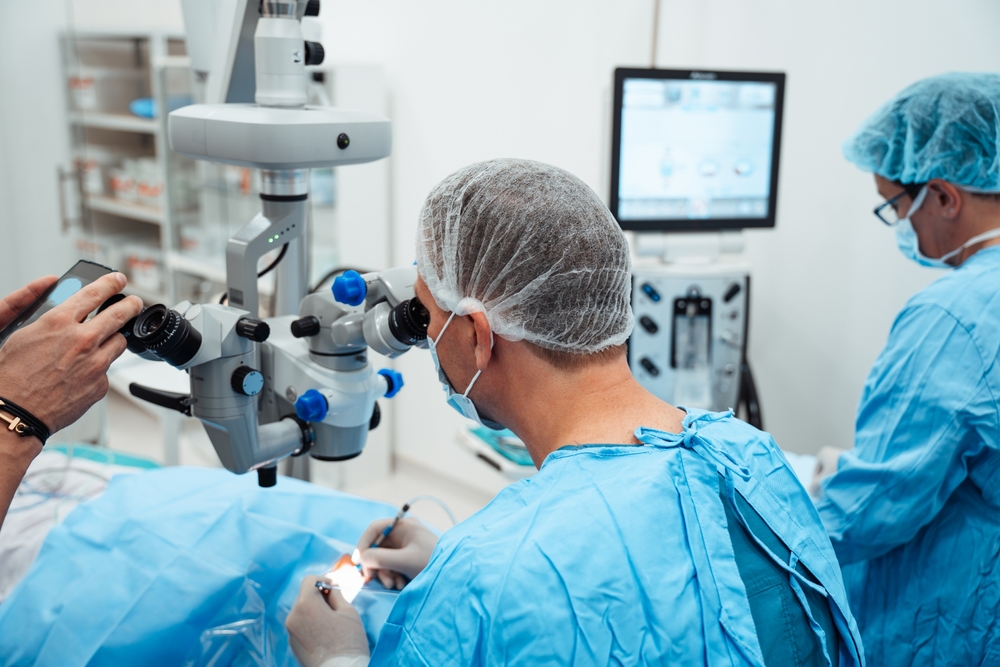
Refractive lens exchange, also called “Clear lens exchange,” involves the removal and replacement of the natural crystalline lens before it has clouded and become a cataract, to correct the need for glasses and contacts. Therefore, this procedure is essentially identical to cataract surgery, except that the crystalline lens being removed is still clear and soft. As a result of removing the clear lens, a future cataract can never form.
Post-operative Care and Expectations
There is rarely any true pain after refractive lens exchange surgery; however, some patients experience temporary itching, burning, and some watering of the eye during the first day post-operatively. Routine post-operative care involves visits at 1 day, 1 week, 1 and 3 months. Several drops are administered pre- and post-operatively and generally are discontinued after 4 weeks. Most patients recognize an improvement in their vision within hours to days after surgery, and the vast majority have achieved their final best uncorrected visual acuity by 1week.
What types of refractive error (need for glasses) can be corrected with this procedure?
This procedure can correct both “nearsightedness” and “farsightedness,” as well as astigmatism and presbyopia (reading vision). Since, at a young age, the crystalline lens has the ability to focus, laser vision correction or ICL implantation (phakic lens implants) are ideal options for refractive correction. But these procedures do not correct the need for reading glasses. Because the crystalline lens is being removed during a refractive lens exchange, this procedure is ideal for patients already in the presbyopic age range. That is, patients 45-50 years and older who have already lost the focusing ability of the crystalline lens. For these patients, we now have the ability to not only correct the need for glasses or contacts at a distance, but, if desired, also correct the need for near vision glasses as well.
Will insurance cover this procedure?
While in some instances medical health savings plans may be used to cover costs, medical insurance will NOT cover this procedure as it is not treating a medical condition. Even though this procedure will prevent the formation of a cataract, the goal of this surgery is refractive vision correction, so much like LASIK or ICL implantation, it is a self-pay procedure
Quick Links
All Medical Eye Care Services
We offer every modern vision correction option to match your eyes, your lifestyle, and your goals

Keep In Touch
For non-urgent questions or to learn more about our services, contact us today!
Quick Links
Locations
Hours of Operation
- Monday 9:00am - 5:00pm
- Tuesday 8:00am - 5:00pm
- Wednesday 8:00am - 5:00pm
- Thursday 8:00am - 5:00pm
- Friday 8:00am - 5:00pm
- Saturday CLOSED
- Sunday CLOSED
- *Experiencing an emergency?
Call our regular office number after hours to reach our on-call doctor
- Monday 9:00am - 5:00pm
- Tuesday 8:00am - 5:00pm
- Wednesday 8:00am - 5:00pm
- Thursday 8:00am - 5:00pm
- Friday 8:00am - 5:00pm
- Saturday Closed
- Sunday Closed
- Monday 9:00am - 5:00pm
- Tuesday 8:00am - 5:00pm
- Wednesday 8:00am - 5:00pm
- Thursday 8:00am - 5:00pm
- Friday 8:00am - 5:00pm
- Saturday Closed
- Sunday Closed
Contact Us
To reach any of our offices with questions and to schedule an appointment, please call our main line at (724) 933-5588
© 2026 Sightline Ophthalmic Associates and Laser Eye Center. All rights Reserved -
Accessibility Statement
-
Privacy Policy
-
Sitemap
Managed and Designed by 